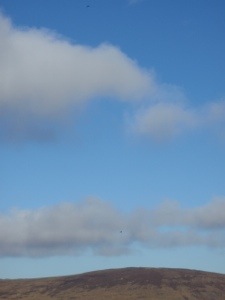
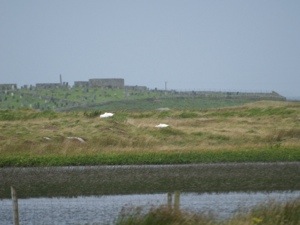
Last week summer returned to the islands – if you have to describe heaven it is standing on the hill at Cletraval looking down on the Lochs and machair laid out below and with enough breeze to keep the midge grounded. The sun coincided with the Autumn equinox on Tuesday, but oddly the day and night weren’t exactly 12 hours each until we got to Thursday. So halfway to winter and still summer doesn’t go away, but a few signs of both appear fleetingly.
Summer still has a toehold, as we still have swallows. And not just flying south, but still feeding nestlings, even in the the bleak winter weather of the week before. I was sure it would have gone by now but a week later, bathed in sun rather than rain, it was still flitting into the old fishing hut every five or so minutes, to be greeted by the chattering of chicks, eager to be fed before the insects dry up. These were not the only late brooding swallows. Four fledglings were sitting in a rank on the machair sheep fence, for all the world looking like they were waiting for a bus to take them to Africa. As an adult appeared above them they instantly flew up, eagerly expecting another mouthful of food. So another brood only just out of the nest and with a lengthy journey ahead of them.
As we watched the swallows, a wink wink call from above our heads announced the arrival of winter – this time pink footed geese from the Arctic. These were a small group and suggested that we would be seeing more over the coming days, but the wind settled into the south and everything has decided to stay in the Arctic and enjoy the 12 hour days whilst the weather is good. Even the bumblebees are enjoying the late flowering scabious, gathering nectar before they die and their queen hibernates for the winter.
The vagaries of climate at this time of year is probably why people built henges. The benefit of knowing this was the moment to organise for winter or plant for spring is obvious. On Cletraval a ripple from the past suddenly appeared, as the standing stone on the committee road began to wander south across Langass hill, until as you reached a point near the aisled house, it lay perfectly in the cleft of the hills and exactly over Barpa Langass in the distance. Why they decided that this alignment was so important, we will never know, but at some point somebody stood on the exact same spot 5000 years ago. I expect they also wondered if the sea trout had appeared on the beach yet and would the small number of geese be replaced with thousands. Had the riches of Autumn finally turned up. Five thousand years later the answer was they hadn’t – yet.

 Thoughts from the edge