Balranald, North Uist
A week into the adventure and the wind is as as we southerners remember it. Warm, strong and from the west. Just getting used to being back in the Outer Hebrides, with single track roads and a rhythm of life more suited to the seasons and the tides than the normal nine to five. The house has a fabulous view over the west side of the RSPB reserve, as well as a view over tidal Loch Phaibeil (Priests Loch) so we can see both the coming and goings of the birds and the water. The machair is now at the end of the flowering season, but there are still loads of flowers to try and identify and we have even managed to catch up with the very end of the flying season of the great yellow bumblebee which satisfies all three of the words in its name.
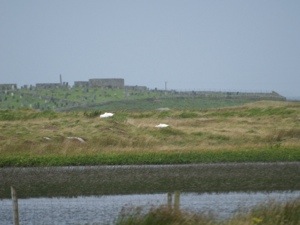
On Tuesday the wind went into the north. The Arctic had been waiting for this plug to be pulled and within a day we were inundated by birds that had been waiting such a tail wind. The first sign was hundreds of godwits, some still in the last vestiges of their brick red breeding plumage, feeding feverishly on the huge expanse of Vallay Strand, intermingled with the slightly shocked local Oystercatchers, who were herded around the strand by the massed ranks of the godwits. Dunljn in breeding plumage, ringed plovers and a whole host of sanderlings joined the throng from the north, all feeding feverishly after nearly a day in the air. It wasn’t just waders that had left Iceland for the winter: as I went to the car on Wednesday evening, the trumpeting call announced the arrival of two swans on our loch – a pair of whoopers from the far north. The first of many wildfowl that will appear and the very first of an invasion of swans – we found another 21 on the Lochportain road on the way to a fondue party on Friday. Our pair have taken up residence on our loch – they are feeding there now and then will clamber out to sit on top of one of the tussocks, like two small splashes of snow in a very green landscape.
The silver tourists have yet to arrive, because it has been very dry up here and they need the lure of the taste of freshwater. A couple of days have been wasted casting for them and I had a titanic struggle with one on Monday. But it had other ideas – one massive jump, a shake of its head and it was gone. The tides come right again on Tuesday, so more standing around waist deep in the Atlantic. We decided that it would be easier with a net, or even with a Bronze Age fish trap which was much favoured here. The richness of the fish probably explains why the whole place is dotted with archaeology, but I guarantee that they didn’t use a rod and fly.
 Thoughts from the edge